Kaitiakitanga and the Responsibility of the Keynote Speaker
Kaitiakitanga and the Responsibility of the Keynote Speaker
During my Master of Creative Practice, I researched how Te Ao Māori principles form the foundation of how I approach every keynote I deliver.
My Master’s wasn’t about becoming a better performer.
It was about formalising the internal gold standard I had been working from for years.
That standard is grounded in Te Ao Māori values:
Whakapapa – knowing where the work comes from
Manaakitanga – care and generosity toward others
Kaitiakitanga – guardianship and responsibility
Rangatiratanga – leadership and integrity
Whanaungatanga – connection and relationship
Kotahitanga – unity and collective purpose
Wairuatanga – the unseen energy in the room
From that research, I created a framework called Te Ara o te Harakeke — the Path of the Flax.
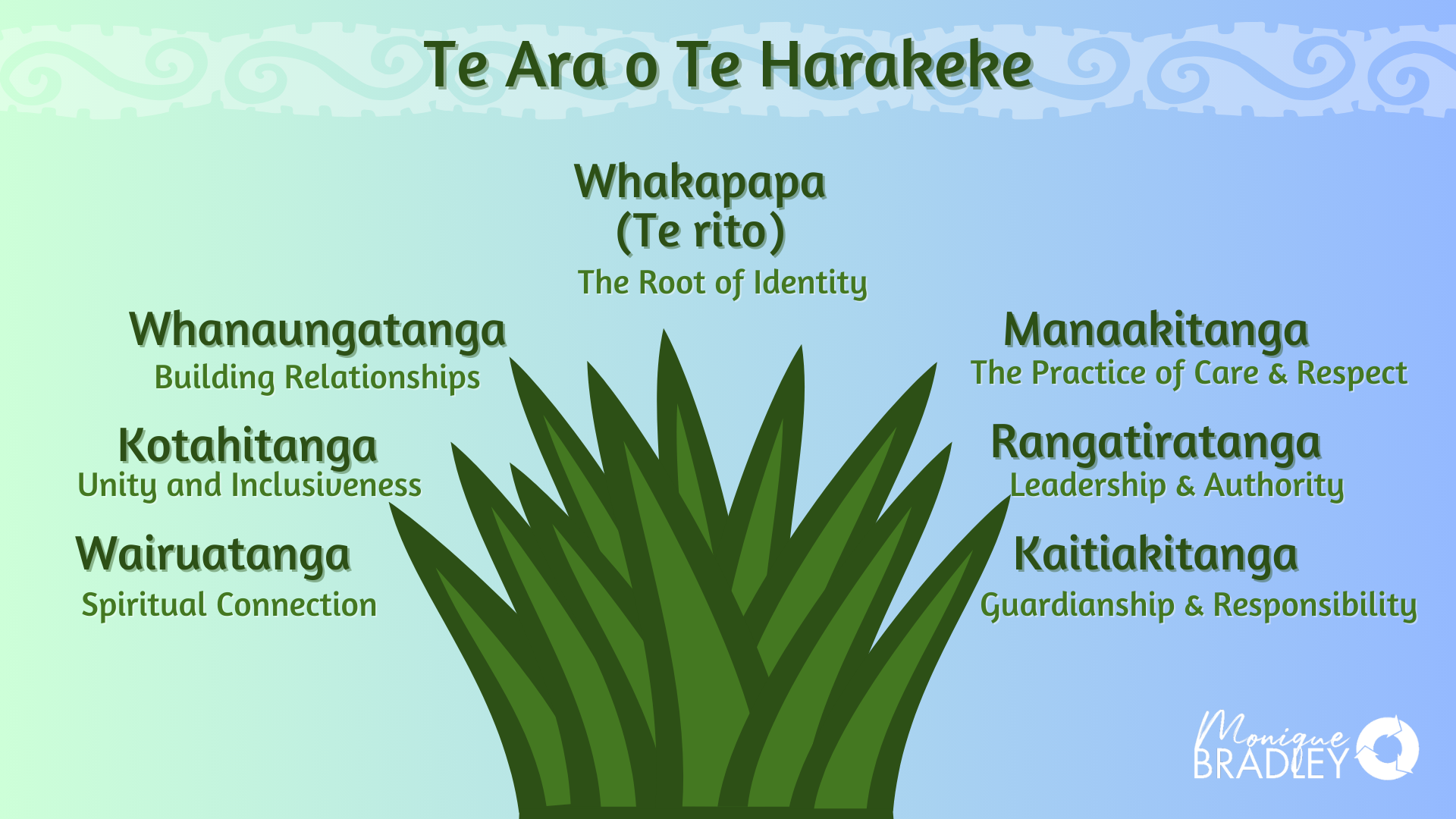
The harakeke (flax bush) became my metaphor.
Each strand holds strength on its own.
But woven together, they form a kete — a basket capable of carrying something meaningful.
For me, keynote speaking is not about performance.
It is about establishing co-presence — a felt sense of unity and co-creation between speaker and audience. A moment where something is built together, not delivered at people.
And lately, one principle has been sitting strongly with me:
Kaitiakitanga. Guardianship.
What does it mean to be a guardian of knowledge when we step onto a stage?
How do we demonstrate care for:
The ideas we share
The people who book us
And the audiences who trust us with their attention?
Over the years, I have heard speakers share deeply traumatic personal stories.
Sometimes, this creates connection.
Sometimes, it is necessary to illustrate a life lesson or a framework.
But sometimes… it is unsettling.
Sometimes it is triggering.
Sometimes it is emotional dumping dressed up as inspiration.
And that is not kaitiakitanga.
Sharing your story is not automatically a keynote.
It is not automatically leadership.
And it is certainly not automatically ethical.
A keynote — like a TEDx talk — is not therapy in a public realm.
It is contribution.
If trauma is shared, it must serve the idea.
It must serve the audience.
It must be framed with care and disclosure.
Otherwise, it centres the speaker — not the room.
This is why I respect the TEDx guidelines so deeply. They are, in my view, world-class guardrails for intellectual integrity and audience care.
So what does Kaitiakitanga look like in practice for speakers?
Here are three commitments I hold myself to:
1. No unsubstantiated claims.
If you are making a claim, back it with research. Data matters. Integrity matters.
2. Remove generalisations.
Blanket statements like “we all experience…” erase nuance. Speak precisely. Honour difference.
3. Trauma must serve transformation.
If you share hardship, it must illuminate a clear idea. It must be contextualised. It must move the audience somewhere constructive. Otherwise, it is self-expression — not keynote craft.
Kaitiakitanga asks us to care for the space we create.
To protect the knowledge we carry.
To honour the people who trusted us enough to sit in the room.
For me, this is not optional.
It is the discipline of the craft.
If you’re interested in speaking with integrity — whether keynote or TEDx — I’m always open to that conversation.
