Why Storytelling is the KEY to Transforming Workplace Culture
I’ve come to believe that organisations dramatically underestimate the role storytelling plays in shaping culture.
Not because leaders don’t care about culture. Most do. But because many I’ve worked with still believe culture is built through strategy decks, values statements, and internal communication plans alone.
I don’t believe that for a second.
I believe culture is built around how people feel.
How people feel when they walk into work.
How they feel after a meeting with leadership.
How they feel when they speak up.
How they feel when they make a mistake.
How they feel when change is communicated to them.
That emotional experience becomes the story people carry with them, and over time, those stories become culture.
I think some organisations are so focused on communicating information that they completely overlook whether people are actually feeling connected to what’s being said. A big claim, I know. But someone has to say this, and it guess it’s going to be me.
I see this constantly in my work.
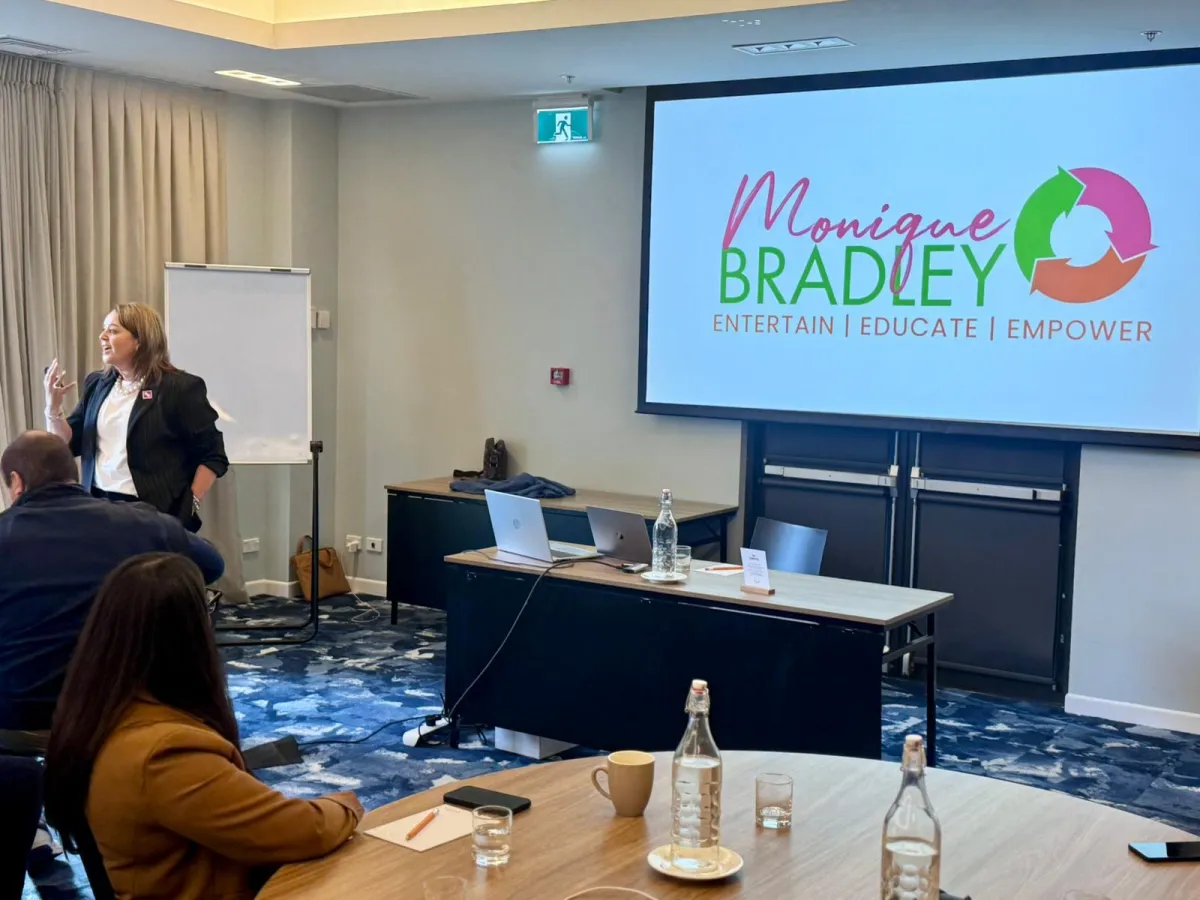
I’ll walk into a room to deliver a keynote and the energy is exactly what you’d expect. Professional. Polite. Slightly disconnected. People are listening, but they’re also checking emails, thinking about deadlines, mentally somewhere else.
Then I introduce a story. A real one.
And the room shifts.
You can feel it happen almost immediately. People put their phones down. Their posture changes and the atmosphere softens. Suddenly it’s not just information being exchanged anymore. People start connecting.
Me and them, turns into us and we.
That fascinates me every single time. Because no matter how advanced we become technologically, human beings are still wired for story. We remember what moves us. We remember what makes us feel something….. And I believe organisations ignore that at their own risk.
I learned this years ago working in live TV shopping. At first, I thought sales was about presenting information clearly. Features. Benefits. Product knowledge. But very quickly I realised people don’t buy because they understand something technically. They buy because they emotionally connect to what that thing means for them.
The story mattered more than the specifications.
That lesson completely changed the way I communicate.
When I built and led a performing arts school, I saw storytelling shape culture in a completely different way. Not through presentations or formal communication. Through everyday moments. Through the way tutors spoke to students. Through the stories young people began believing about themselves.
Confidence is a story.
Belonging is a story.
Safety is a story.
And organisations are shaping those stories every single day whether they realise it or not.
That’s why I believe storytelling is not a soft skill. I think it’s one of the most underdeveloped leadership and culture-building capabilities in business today.
Because people do not experience workplaces logically. They experience them emotionally.
A restructure is never just a restructure.
A difficult conversation is never just a difficult conversation.
Silence from leadership is never just silence.
People create meaning around those moments. And the meaning they create shapes behaviour.
That’s the part I think some leaders miss.
Culture is not built through what organisations say their values are. It’s built through the emotional experiences people repeatedly have inside the organisation.
Stories accelerate that process faster than almost anything else I’ve seen.
I’ve watched rooms full of people who barely know each other suddenly connect because someone shared something honest. I’ve watched leaders become more relatable the moment they stop sounding polished and start sounding human. I’ve watched teams soften toward each other after hearing the story behind someone’s behaviour or decision-making.
Stories create proximity.
They collapse hierarchy.
They reduce defensiveness.
They remind people of each other’s humanity.
That matters now more than ever, especially as AI becomes more integrated into communication.
We are entering a time where organisations can automate information beautifully. Emails, reports, presentations, learning modules, internal updates. AI can generate polished communication in seconds.
But polished does not automatically mean meaningful, and I think the organisations that will thrive in the future will be the ones that understand the difference.
Because the more artificial communication becomes, the more valuable authentic human connection becomes.
That’s why I keep coming back to storytelling. Not as performance. Not as corporate theatre. But as a genuine leadership and culture practice. Stories matter.
They are a way of helping people feel seen. A way of creating trust. A way of helping people connect to something bigger than their individual role.
Maya Angelou said people will not remember what you said, but they will remember how you made them feel. I’ve always loved that quote. But I think the missing piece is this: stories are the bridge that make that feeling possible.
That’s the real power of storytelling.
Not manipulation.
Not performance.
Connection.
I firmly believe - and would put a bet on it - that organisations that learn how to create that connection intentionally will transform not just how people communicate… but how people experience work itself.
And when we spend so many hours of our life working, wouldn’t it be great if the stories we carry about that experience were meaningful?
That’s it for now.
Over and out.
Monique.
Ps: If you want to experience storytelling in action with your people, holler. Keynotes, training days, workshops. It works.
