The Pro-Tip: Your Secret for Seamless MC-to-Speaker Transitions
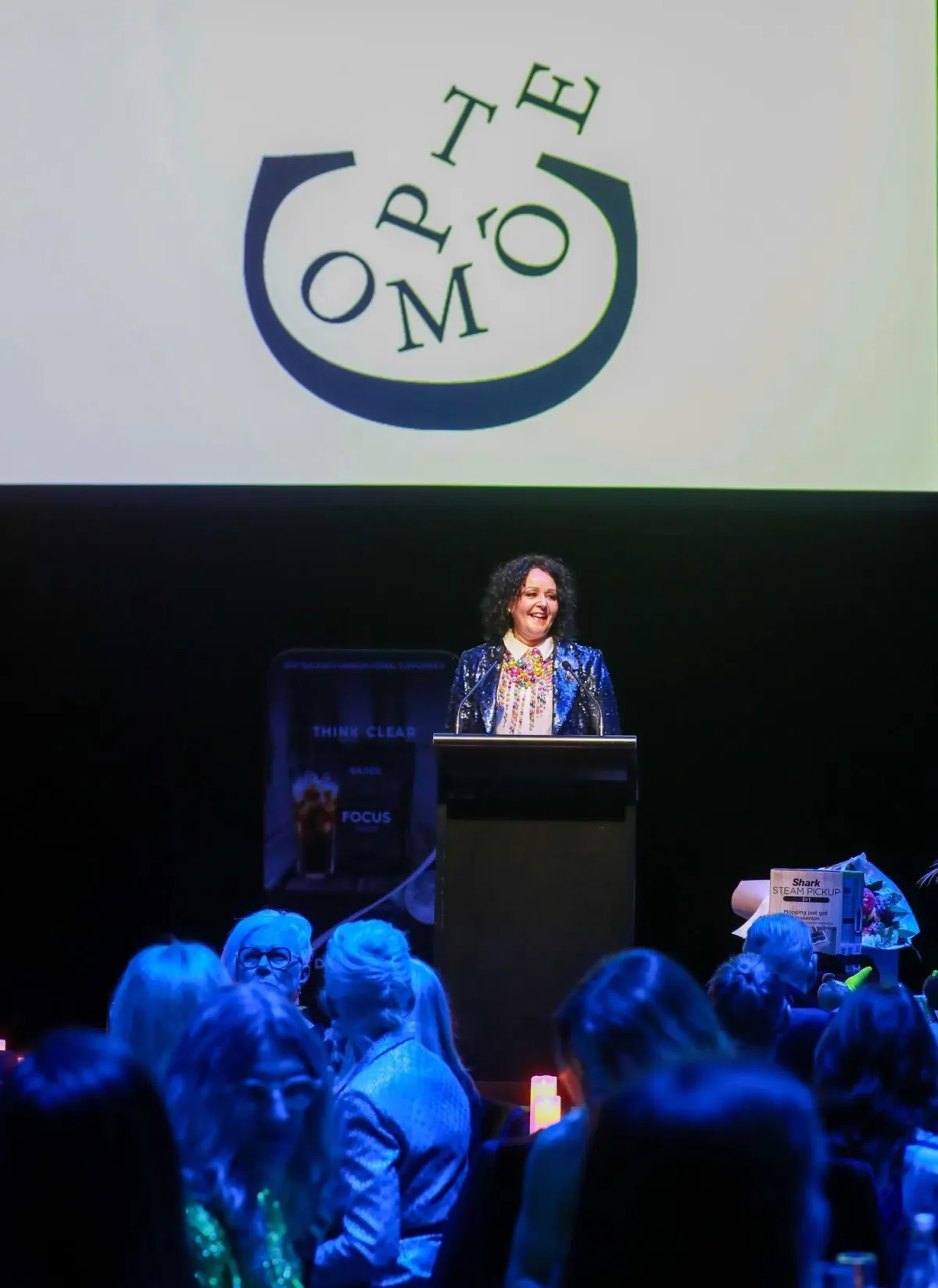
After years of MC’ing conferences, awards nights, and leadership events, there’s one thing I notice almost nobody talks about.
It’s not the keynote.
It’s not the slides.
It’s not even the speaker.
It’s the transition.
That tiny, in-between moment where one person walks off stage and another walks on.
Because that moment?
That’s where the audience either leans in
or checks out.
And some event planners underestimate just how much influence lives there.
I’ve watched brilliant speakers walk into a flat room and have to spend the first five minutes fighting to win people back.
Not because they weren’t good.
Not because their content wasn’t strong.
But because the energy dropped in the handover.
The intro was read like a LinkedIn profile.
The room shuffled.
Phones came out.
And suddenly the speaker had to rebuild trust from zero.
I’ve also seen the opposite. I’ve seen a room already leaning forward before the speaker even says hello. I’ve seen audiences clap louder, listen deeper, and stay present longer. Not because the speaker was more famous. Because the transition was intentional.
That’s the difference.
Here’s what I’ve learned.
A great transition isn’t administrative. It’s emotional.
Too often, we treat introductions like logistics.
Name.
Job title.
Achievements.
Housekeeping.
But no one connects with a résumé. Humans connect with meaning.
The role of the MC isn’t to read information. It’s to guide the emotional temperature of the room.
I often say this when I’m training leaders and speakers:
As Miranda Knapton, National President of BNI NZ, says “Leaders don’t take the temperature in the room. They set it.” The same is true for an MC. And nowhere is that more true than in a handover.
If the audience has just been laughing, you can’t suddenly drop them into a serious leadership talk without preparing them.
If they’ve just been sitting for an hour, you can’t expect instant engagement without re-energising them.
If they don’t understand why this next speaker matters to them, their brain quietly files it under “optional.” And once that happens, it’s very hard to get them back.
Because attention is fragile. Trust is fragile. And both are built in seconds.
What I like to do, whether I’m MC’ing or coaching event teams, is think of the transition like a bridge. My job is to carry the audience across, not dump them on the other side.
That bridge usually has three simple ingredients.
First, context.
Why this speaker?
Why now?
Why should this audience care?
Not their entire career history, just the relevance. Help the audience see themselves in what’s coming.
Second, energy.
Energy doesn’t mean hype. It means congruence. Match the mood. If the room is reflective, slow it down. If the room is buzzing, ride that wave. Flow matters more than volume. A good transition feels like one continuous conversation, not a gear change.
And third, humanity.
This is the part some people miss.
Before a speaker speaks, the audience is subconsciously asking:
Do I trust you?
Do I relate to you?
Are you for me?
A single human detail answers all three.
A short story.
A shared value.
A moment that says, “This person gets you.”
Now the speaker isn’t a stranger. They’re someone the audience is already open to. And openness is everything.
Because here’s the truth: The first 30 seconds of any talk decide the next 30 minutes.
As a judge for the Country Music Awards, I learned this fast. Artists had half a minute to hook me before my pen hit the page. It’s the same at conferences. If we lose people at the beginning, we spend the rest of the session trying to win them back.
But if we carry them in well? The speaker starts ahead, and that’s a gift.
This is why I believe MC’ing is leadership.
It’s not just running the agenda.
It’s holding the room. Listening. Reading body language. Feeling the collective energy. And consciously shaping what happens next.
It’s influence in real time.
When MCs and speakers work together like this, something beautiful happens.
Events feel seamless. Not rushed. Not clunky. Not disjointed.
Seamless.
The audience doesn’t notice the mechanics. They just feel taken care of. And when people feel safe and connected, they listen differently. They engage differently. They act differently. Which, at the end of the day, is the whole point.
Because the success of a keynote isn’t measured by applause.
It’s measured by what people do next…….And that journey often starts in the handover.
So here’s my quiet pro-tip for every event planner, leader, and MC:
Treat the transition like it matters as much as the talk, because sometimes, it matters more.
That’s where trust begins.
That’s where attention is won.
And that’s where impact really starts.
